Microsoft · Product Vision · 2020Microsoft Rewards: Giving a Loyalty Program a Soul
The tension
You earn points every time you search on Bing. You've been a member for two years. But if someone asked you what Microsoft Rewards looks like, you'd draw a blank — or maybe remember a generic gold medal that could belong to any app on your phone.
Microsoft Rewards was one of the largest loyalty programs in tech, and most users had never heard of it. Those who had found it confusing and difficult. The program's only visual signature was a medallion icon repeated without meaning across touchpoints — a symbol that said "loyalty program" but never said which one or why it matters.
The deeper issue wasn't visual polish. It was a fundamental misalignment between what the program was and how it felt. Microsoft Rewards was being treated as a transactional afterthought — a points ledger — rather than a relationship with the user. The brand didn't need a refresh. It needed a reason to exist visually.
My role
As Senior Design Lead, I owned the end-to-end brand identity for Microsoft Rewards — from strategic positioning through final execution across every touchpoint. I led the creative vision, icon exploration, identity system design, sub-brand architecture, and cross-platform application.
I partnered closely with Microsoft Marketing to align the Rewards identity with the parent brand, while carving out a personality distinct enough to stand on its own. The work spanned digital products (web, mobile, Xbox), physical environments (events, retail), and marketing collateral — requiring a system flexible enough to work everywhere without losing coherence.
The insight: don't compete with the logo — grow out of it
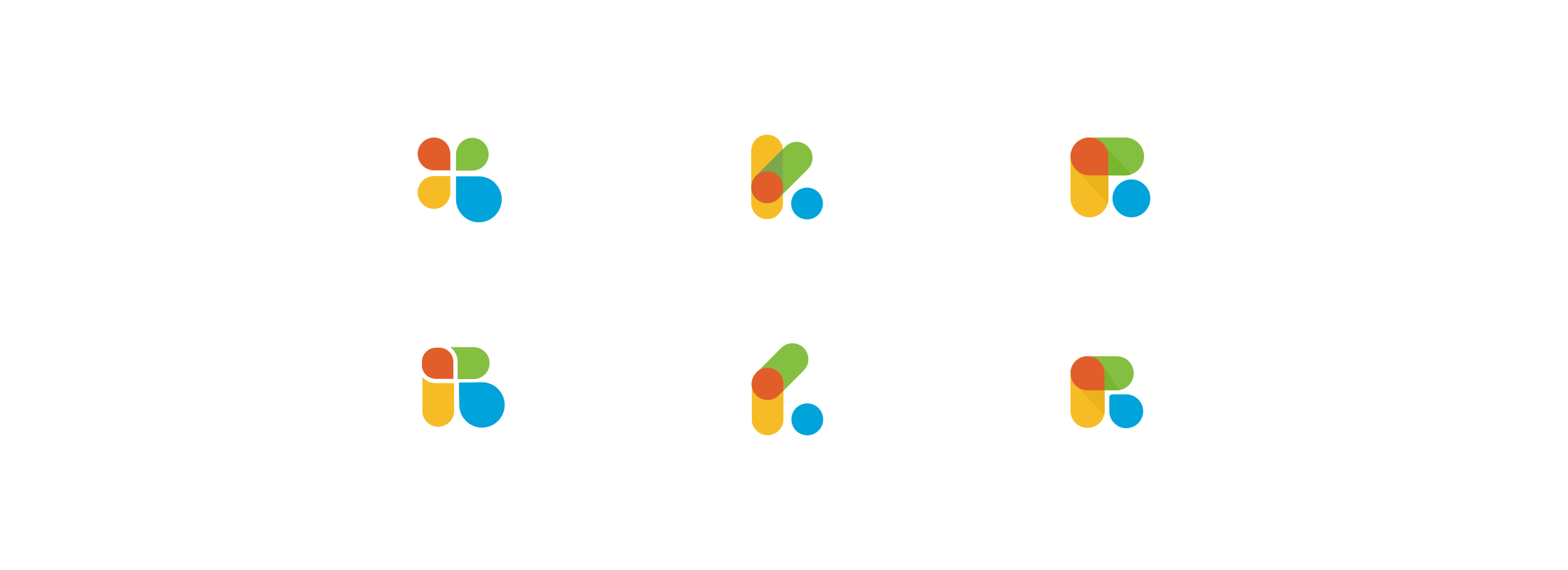
The exploration began with the existing Rewards medal — the only visual equity the program had. I generated dozens of icon concepts spanning medals, abstract marks, hearts, crosses, and compositional forms, searching for a shape that could carry both the Microsoft DNA and a distinct Rewards personality.
The breakthrough came from deconstructing the Microsoft logo itself. The four-color window — red, green, blue, yellow — is one of the most recognized marks in the world. Rather than compete with it, I asked: what if the Rewards identity grew out of those same shapes?
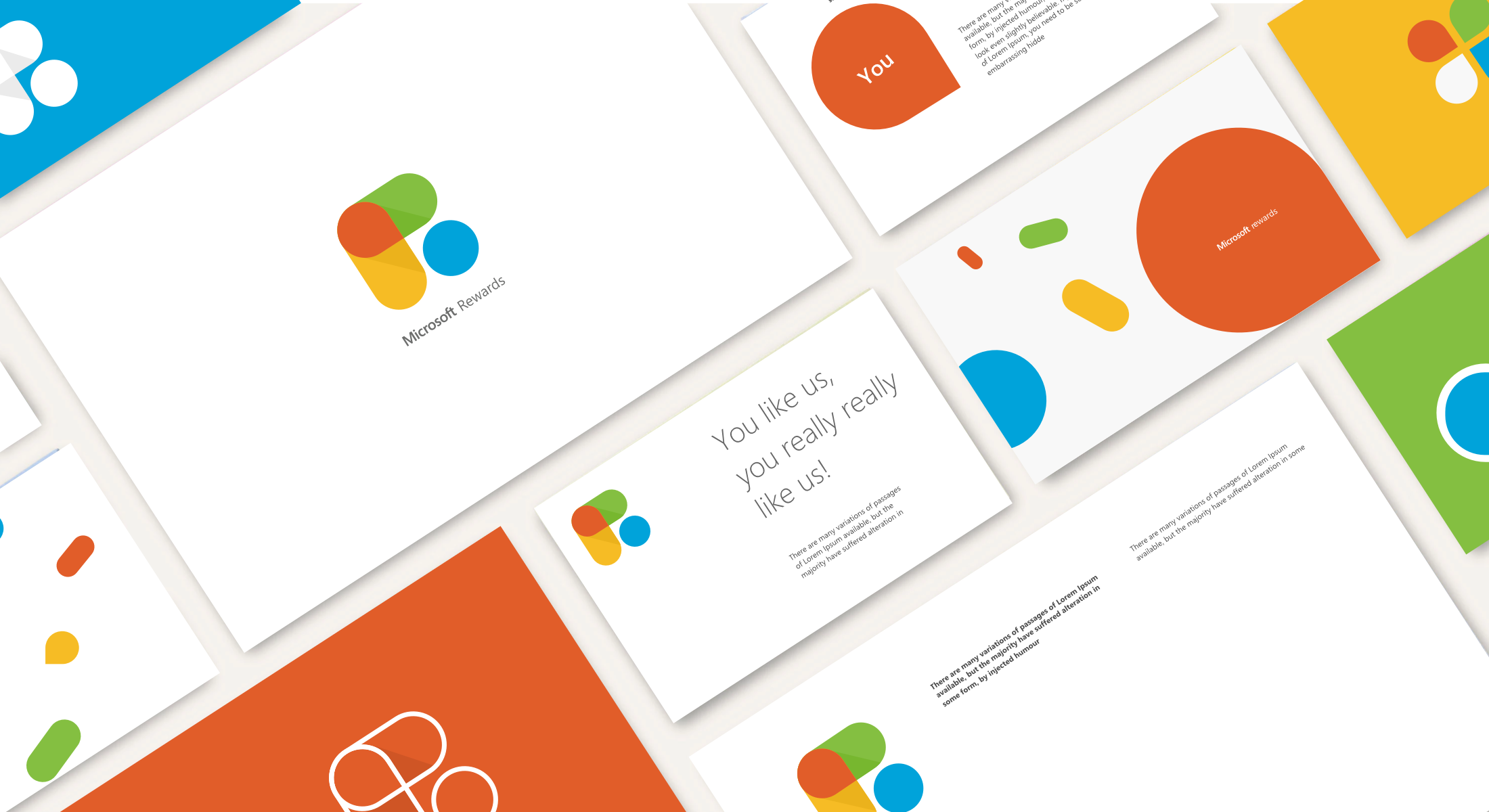
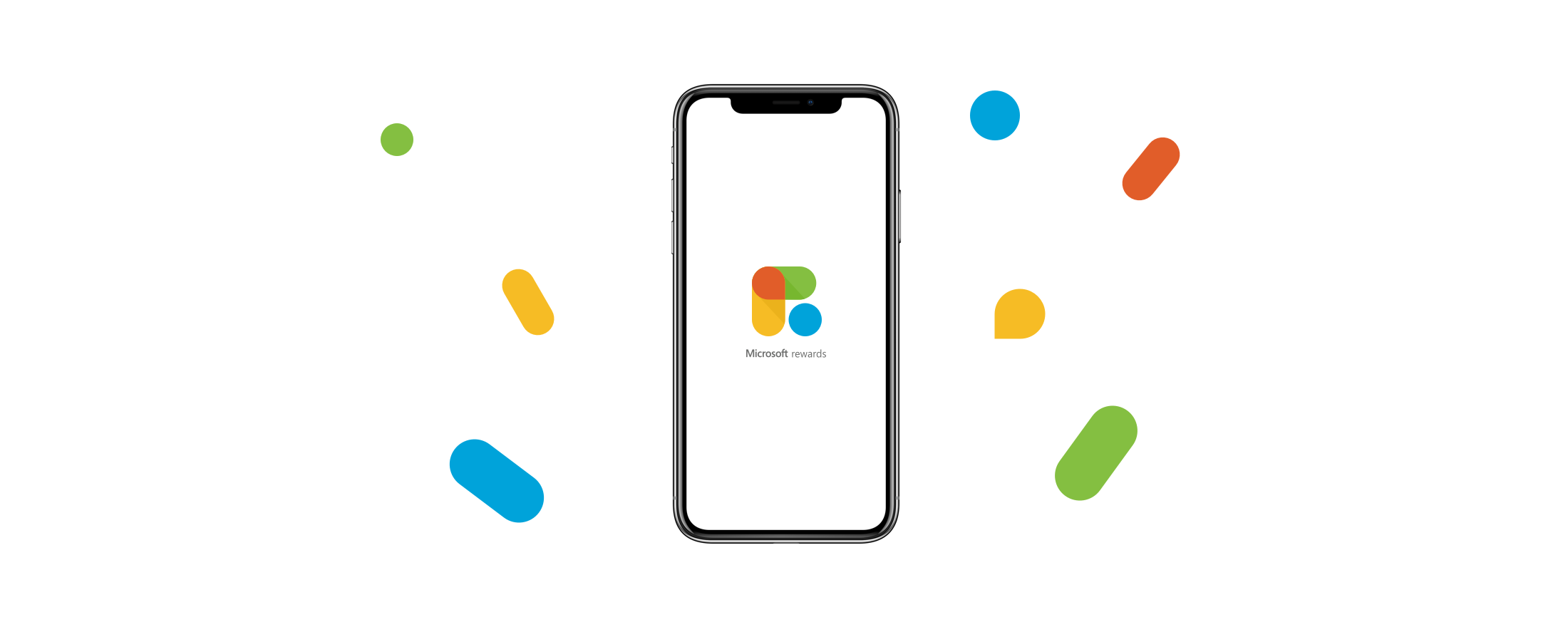
The final mark is built from four organic, rounded forms — a pill shape, a rounded rectangle, and a circle — arranged asymmetrically in the Microsoft brand colors. It reads as a stylized "R" while echoing the four-pane window. The shapes overlap with translucency, creating a sense of depth, generosity, and forward motion. It's playful where the Microsoft logo is structured. Warm where the parent brand is precise.
The framework: a generative identity system
Most brand identity projects deliver a logo and a style guide. This project delivered a living system — a set of visual building blocks that generate infinite expressions while remaining unmistakably Microsoft Rewards.
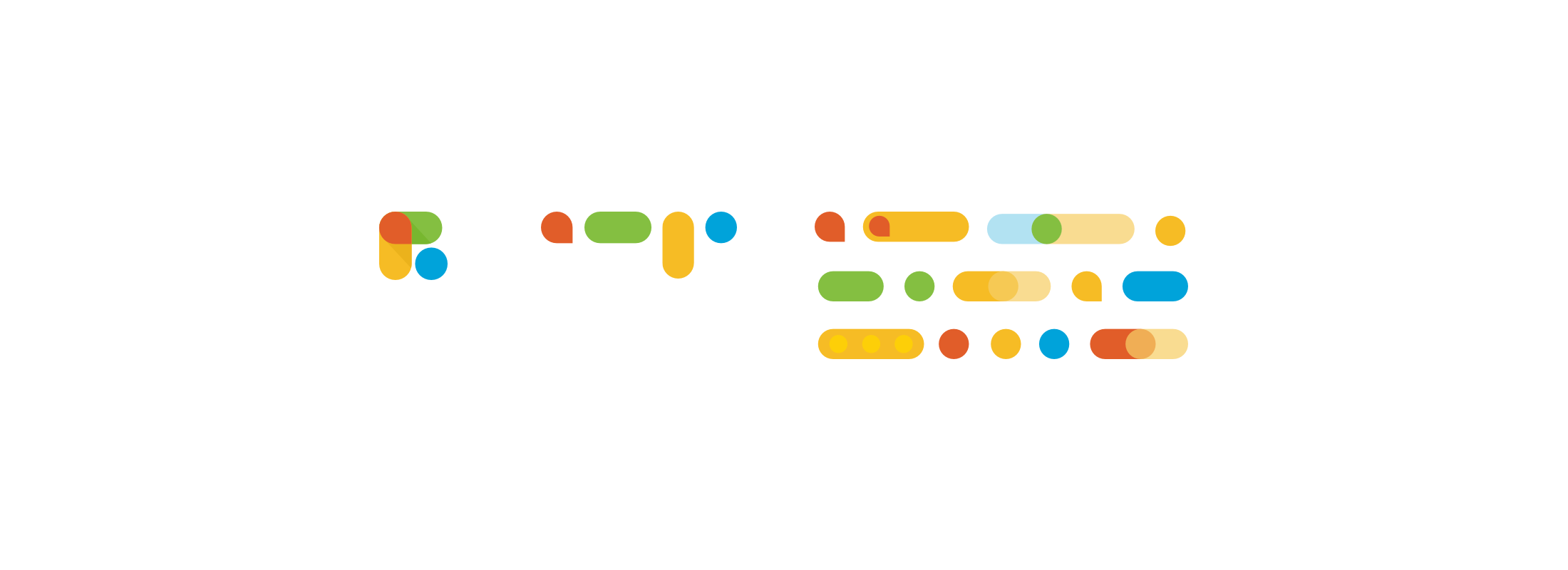
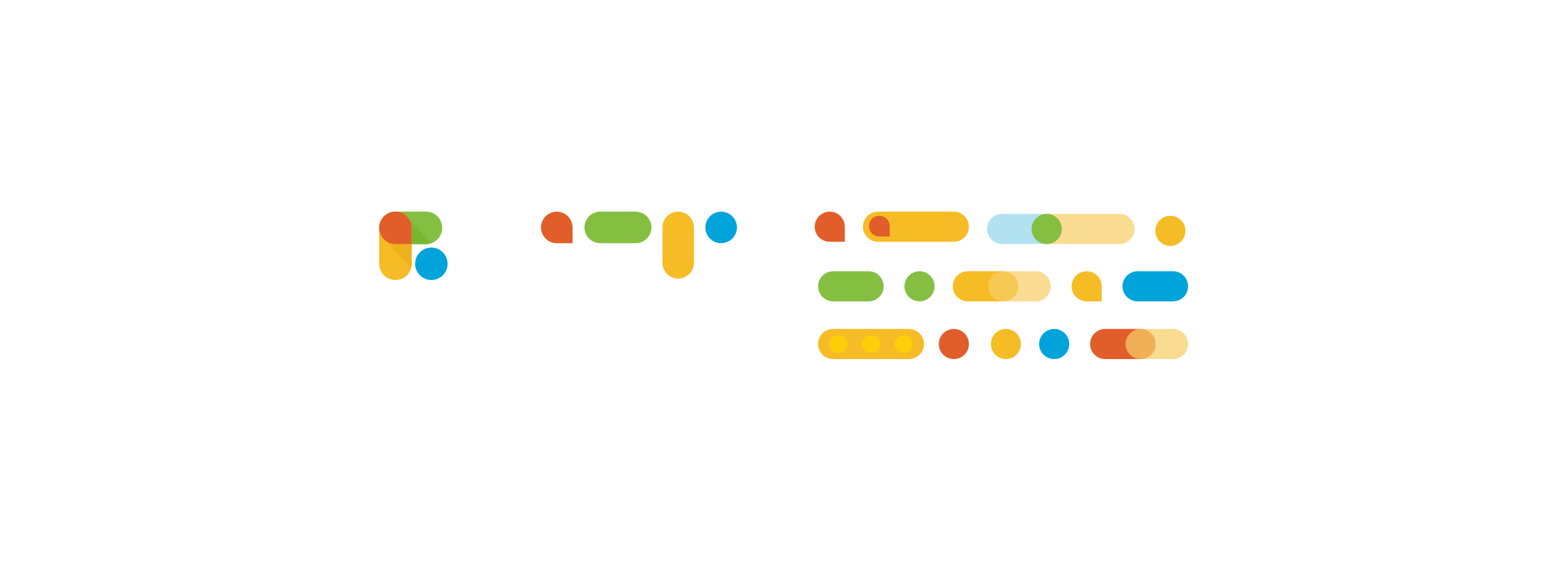
The creative leap was treating the logo not as a fixed mark but as a kit of parts. The four component shapes — each carrying one brand color — could be deconstructed, rearranged, and extended across every touchpoint. By reducing the identity to its atomic components — four colors, four organic shapes, transparency, and overlap — every designer on the team could create on-brand work without referencing a style guide. The system teaches itself.
We repositioned the brand around a simple but ambitious idea: Microsoft Rewards should feel like Microsoft's way of saying "we see you." Not a punch card. Not a points ledger. A relationship enabler — built on three strategic pillars:
Leverage Microsoft's trust — Look and feel unmistakably Microsoft, borrowing the parent brand's credibility while carving out a distinct personality
Shift the mental model — Move from pay-to-play to true loyalty; from transactional to relational
Drive product discovery — Help customers discover and use Microsoft products across multiple endpoints, growing daily active usage

The system in action: from screen to space
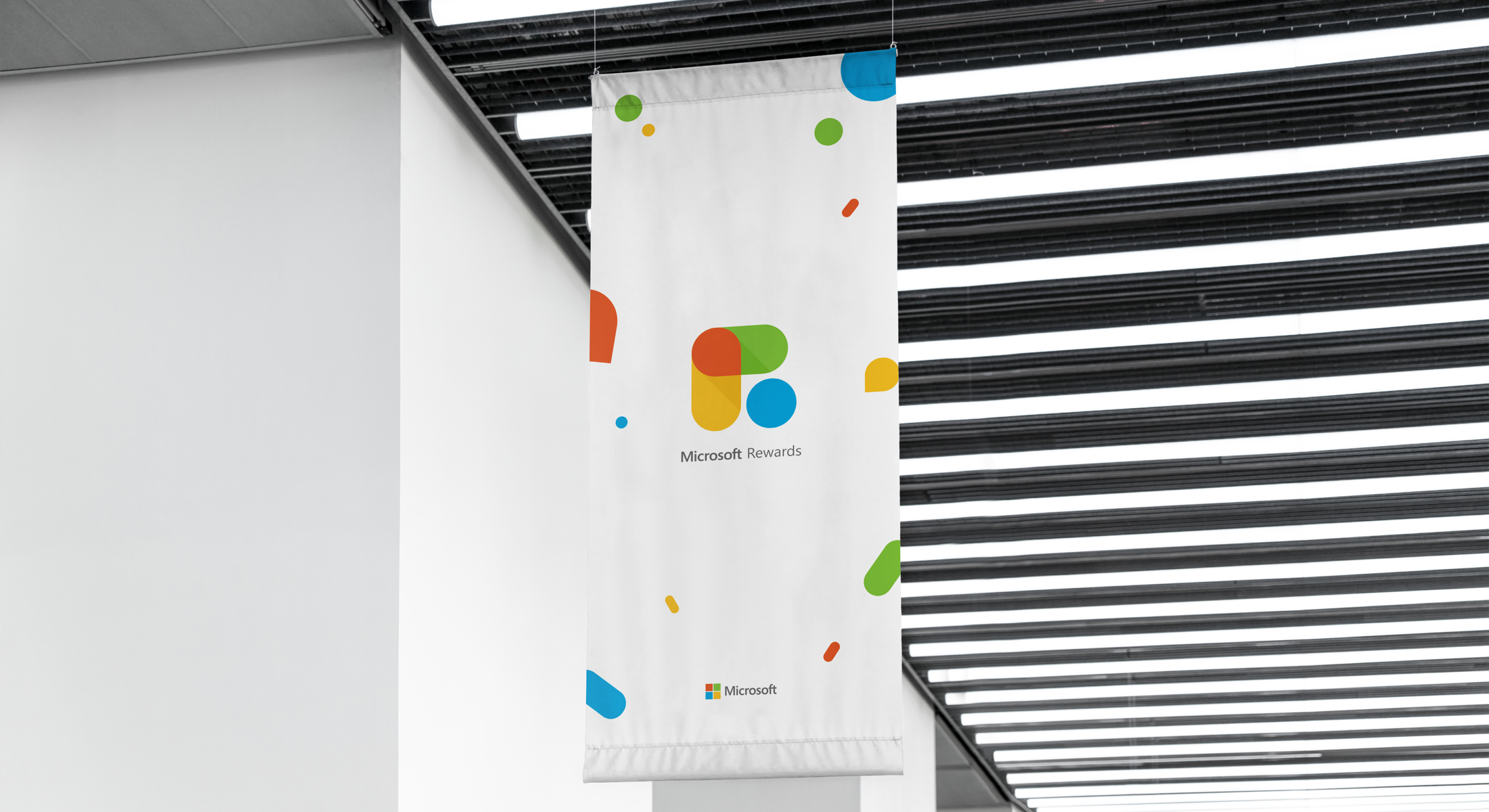
A brand identity that only lives on screens is half a brand. The system was designed to travel seamlessly from digital to physical — proving the mark's versatility and building the case for a truly unified brand presence.
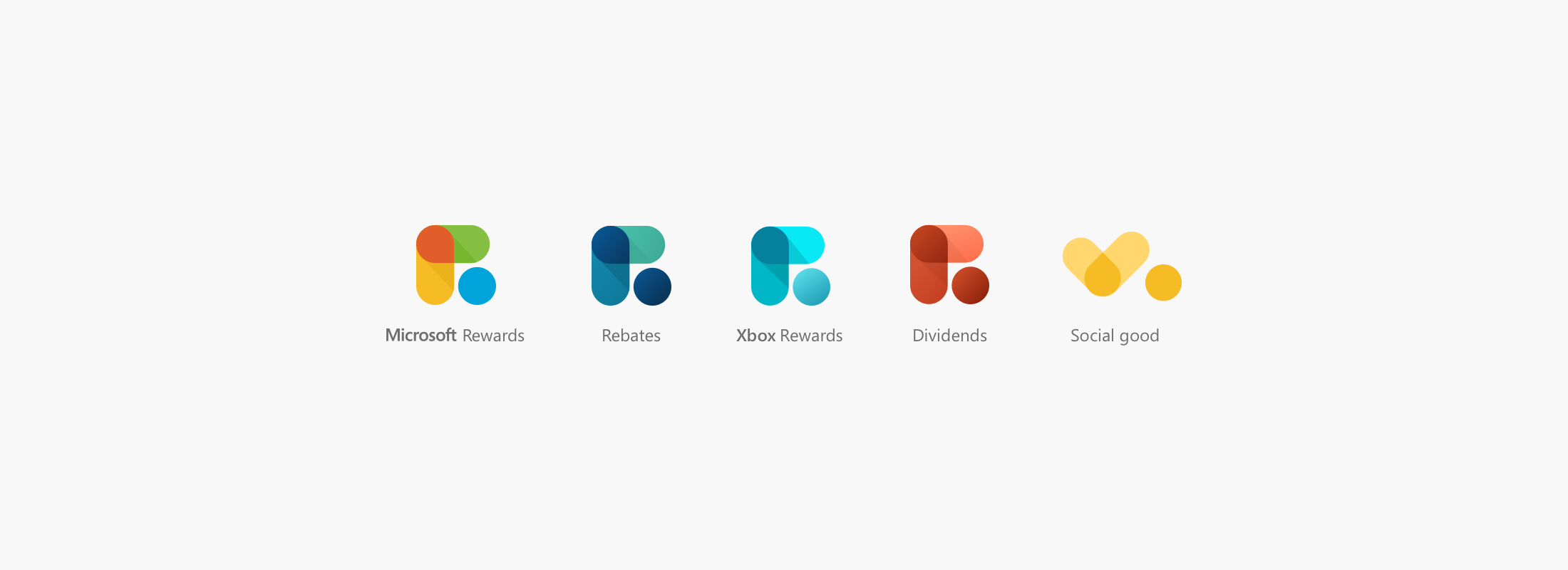
Sub-brand architecture
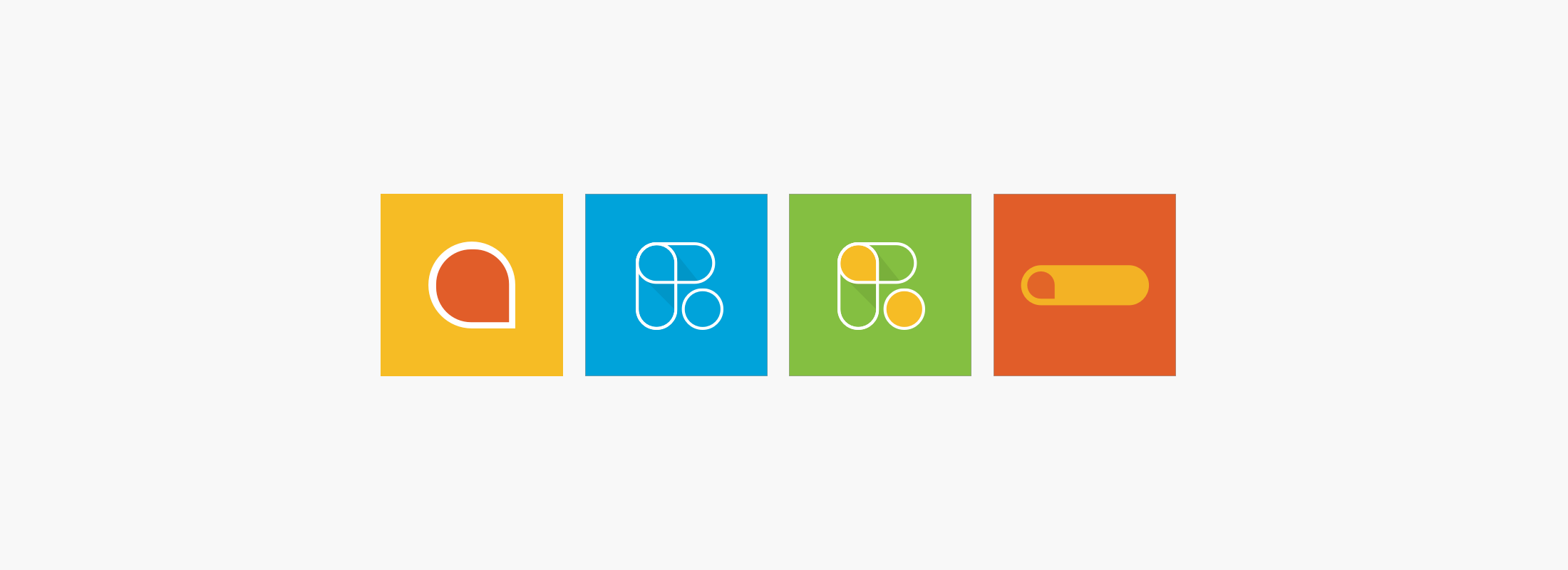
The same four shapes shift in color palette to create distinct sub-brands — one system, five personalities. Each variant is instantly recognizable as part of the Rewards family while carrying its own emotional tone: Xbox Rewards feels electric and competitive; Social Good feels warm and communal.
Digital products
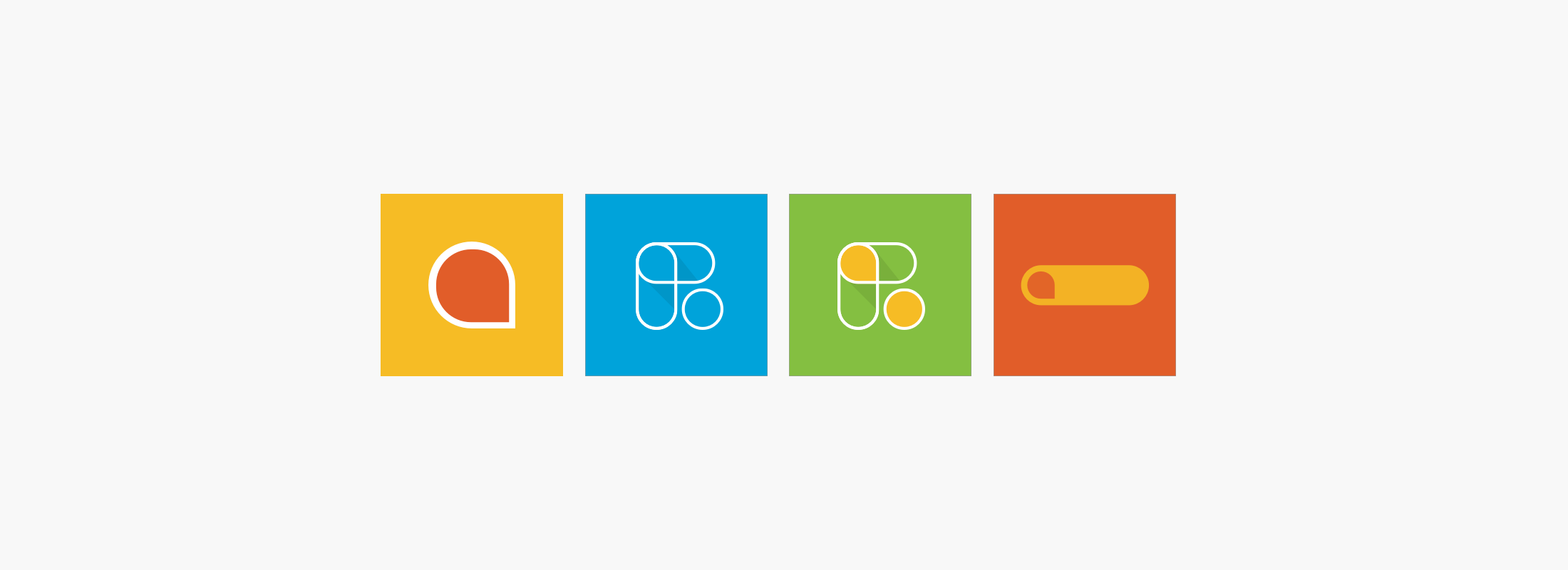
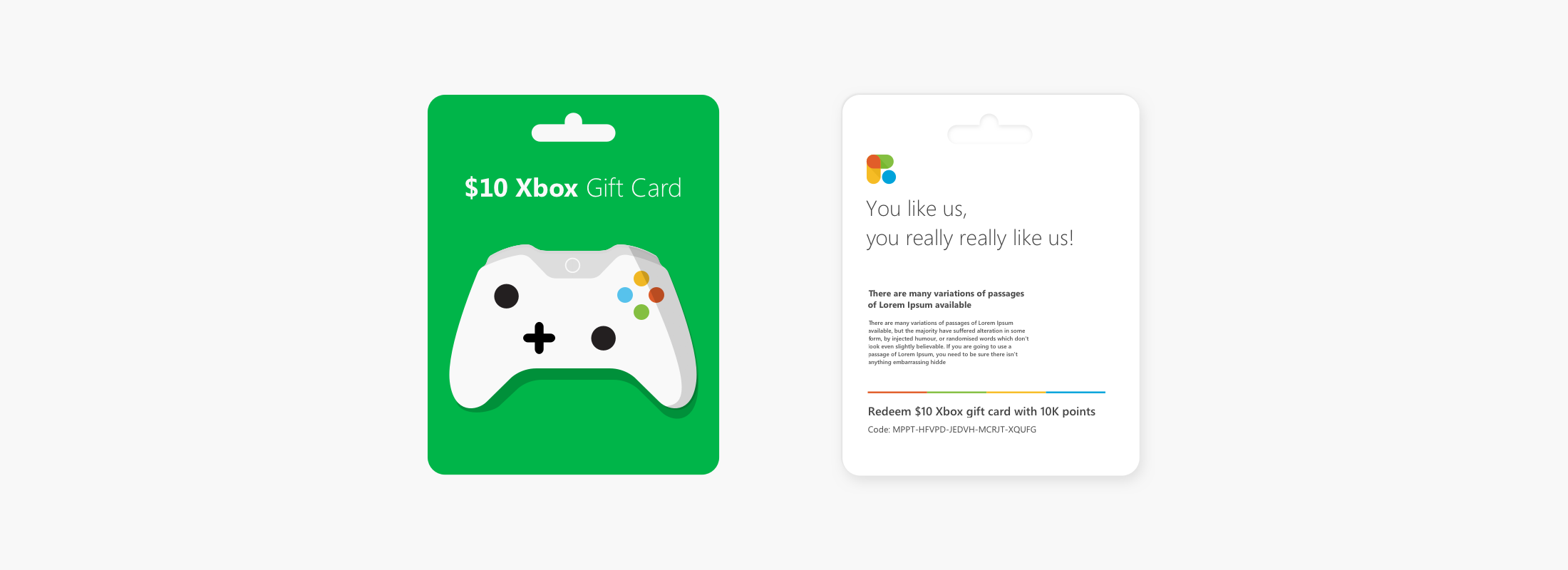
The visual vocabulary extends directly into interface elements — conversation bubbles, notification badges, progress indicators, and loading motions all inherit the same rounded, colorful DNA. The logo's component shapes break apart into patterns, textures, and compositions that become backgrounds, loading animations, and environmental graphics.
Physical and environmental
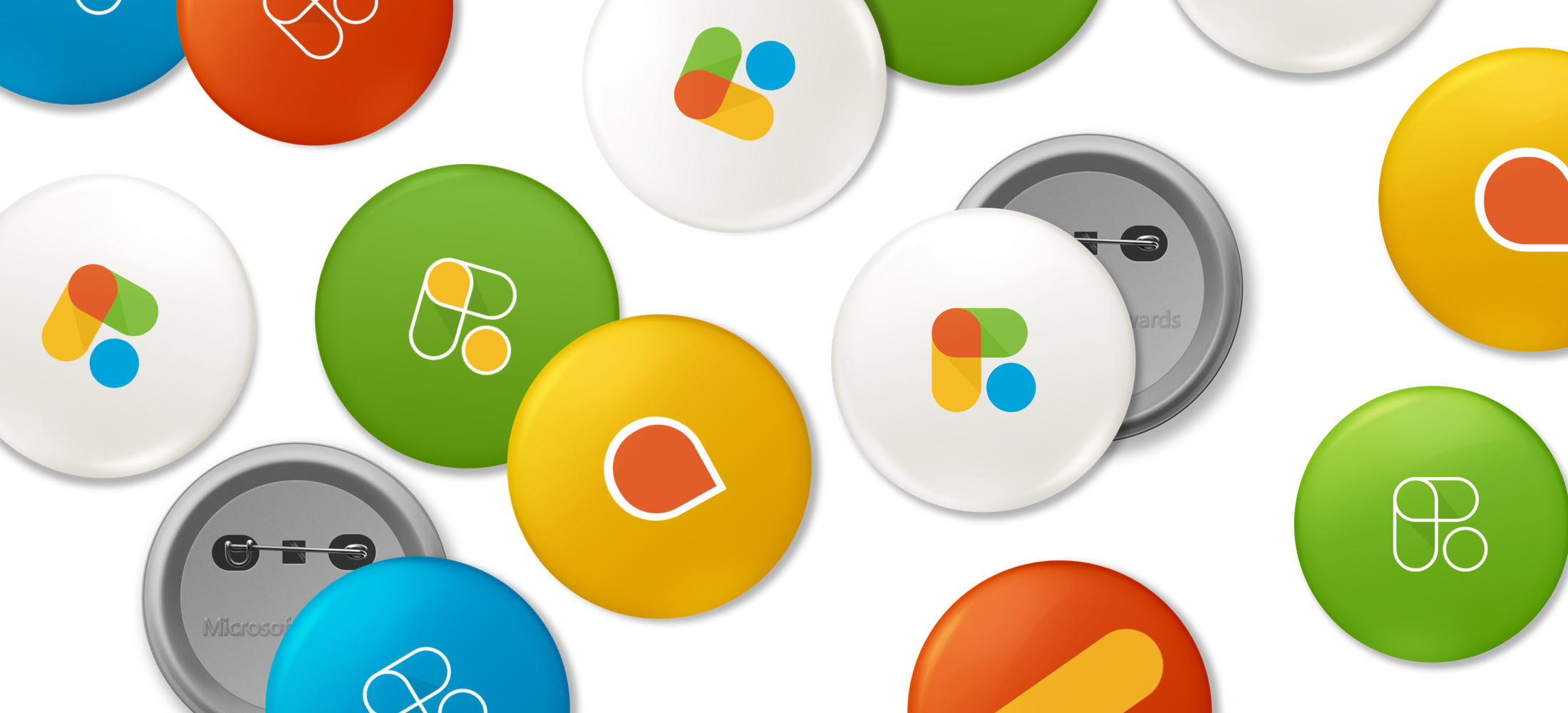
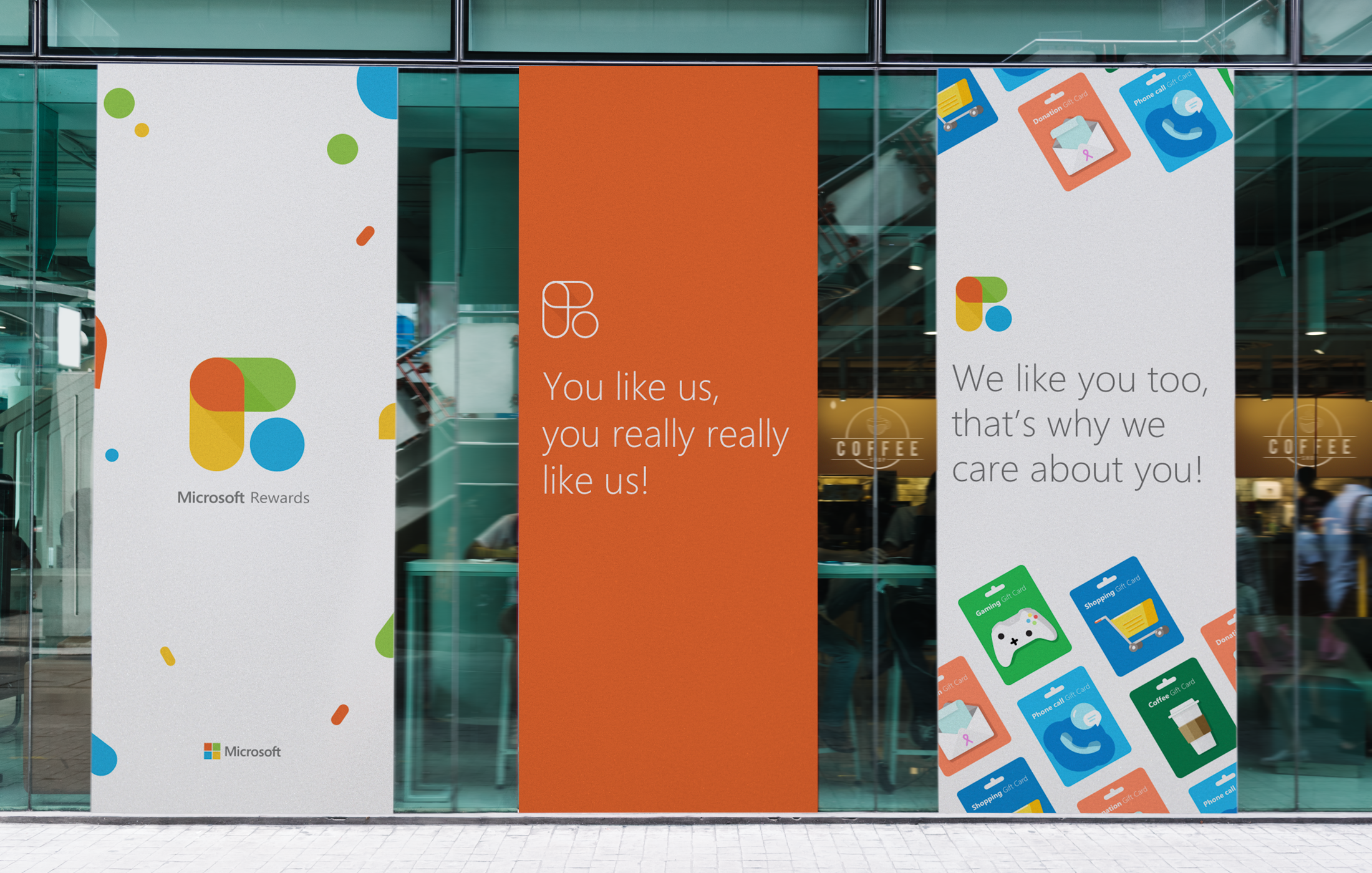
The deconstructed shapes create bold, graphic compositions across conference stages, retail spaces, merchandise, and marketing collateral. Each piece functions as a standalone brand expression — energetic, celebratory, and unmistakably Rewards.
Reflection
This project taught me that brand identity is infrastructure design. A logo is a single expression; a system is a language. The difference matters because brands don't live in style guides — they live in the hands of dozens of designers, marketers, and product teams who need to create on-brand work every day without calling the brand team for permission.
The hardest part wasn't designing the mark. It was finding the constraint that made everything else inevitable. Once we committed to deconstructing the Microsoft logo's four shapes into organic, rounded forms, every subsequent decision — sub-brands, patterns, UI components, physical applications — fell out naturally. The system didn't need rules because the building blocks themselves enforced coherence.
What I'm most proud of is the shift in mental model — from "loyalty program" to "relationship enabler." That reframing changed not just the visuals but the strategy. When the brand promise became "We like you too, that's why we care about you", the identity had to feel generous, warm, and human. The playful, overlapping shapes — with their transparency and forward motion — embody that promise in a way a medallion never could.